
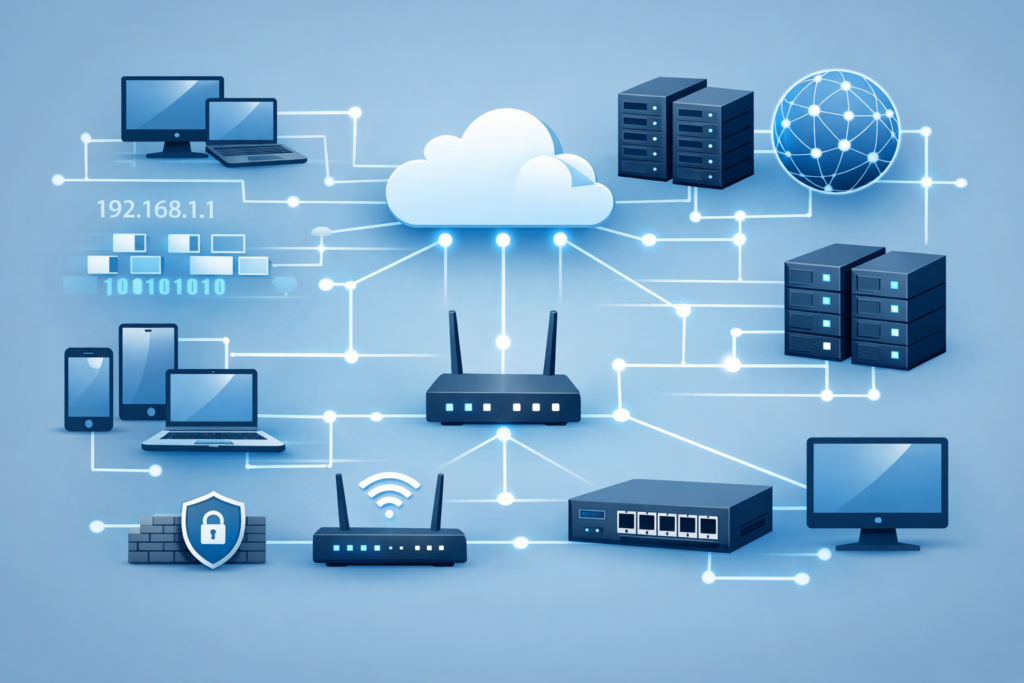
Learn networking fundamentals with clear explanations, real-world examples, and core concepts like TCP/IP, IP addresses, DNS, and network security.
Networking fundamentals explain how computers and devices communicate, share data, and access the internet. Core concepts include network types, protocols, IP addressing, the OSI model, and basic security principles that power modern digital communication.
Networking fundamentals are the backbone of today’s digital world. From browsing websites and using mobile apps to cloud computing and online businesses, everything relies on computer networks. This article is designed for beginners who want a clear, structured, and practical understanding of how networking works, why it matters, and how core networking concepts are applied in real-world environments.
Whether you are a student, aspiring IT professional, or someone exploring technology careers, mastering networking basics builds a strong foundation for cybersecurity, cloud computing, software development, and system administration.
What Are Networking Fundamentals?
Networking fundamentals are the basic principles and concepts that explain how devices connect, communicate, and exchange data over a network. These fundamentals define how information moves from one device to another reliably and securely.
At its core, networking focuses on enabling communication between computers, servers, routers, and other digital devices. Understanding these basics helps learners troubleshoot issues, design efficient networks, and understand how the internet functions behind the scenes.
Why Is Networking Important in Modern Technology?
Networking is essential because almost every modern service depends on connectivity. Online banking, social media, remote work, video streaming, and cloud storage all require reliable networks.
For businesses, networking enables data sharing, collaboration, system integration, and secure access to resources. For individuals, it provides access to information, communication tools, and digital services.
From a career perspective, networking knowledge is a core requirement for roles in IT support, cybersecurity, cloud engineering, and infrastructure management.
What Is a Computer Network?
A computer network is a group of devices connected together to share data and resources. These devices can include computers, servers, printers, smartphones, and IoT devices.
Networks allow devices to communicate using wired or wireless connections. The main goal is to enable fast, secure, and accurate data transmission between endpoints.
Examples of shared resources include files, internet connections, databases, and applications.
Types of Computer Networks Explained
Computer networks are categorized based on size and coverage area. The most common types include:
- LAN (Local Area Network): Covers small areas like homes, offices, or schools
- WAN (Wide Area Network): Covers large geographical areas, such as the internet
- MAN (Metropolitan Area Network): Covers cities or large campuses
- PAN (Personal Area Network): Connects personal devices like phones and laptops
Each type serves different use cases, but all follow the same networking fundamentals.
How Does Data Travel Across a Network?
Data travels across networks in small units called packets. When a device sends information, the data is broken into packets, transmitted, and reassembled at the destination.
Each packet contains:
- Source address
- Destination address
- Data payload
- Error-checking information
This packet-based communication ensures reliability, efficiency, and error detection during transmission.
What Is the OSI Model and Why Does It Matter?
The OSI (Open Systems Interconnection) model is a conceptual framework that explains how network communication works in seven layers.
The seven OSI layers are:
- Physical
- Data Link
- Network
- Transport
- Session
- Presentation
- Application
Each layer has a specific role, from transmitting raw signals to displaying data for users. The OSI model helps professionals understand, design, and troubleshoot networks systematically.
Understanding the TCP/IP Model
The TCP/IP model is the practical framework used by the internet. It consists of four layers:
- Network Access
- Internet
- Transport
- Application
Protocols like TCP, IP, HTTP, and FTP operate within this model. TCP/IP ensures reliable communication and data integrity across diverse networks.
What Is an IP Address?
An IP address is a unique identifier assigned to each device on a network. It allows devices to locate and communicate with each other.
There are two main types of IP addresses:
- IPv4: Uses a 32-bit format (e.g., 192.168.1.1)
- IPv6: Uses a 128-bit format to support more devices
IP addressing is fundamental for routing data accurately across networks.
What Is DNS and How Does It Work?
DNS (Domain Name System) translates human-readable domain names into IP addresses. Instead of remembering numeric IPs, users access websites using names like example.com.
When a user enters a website address, DNS servers resolve it to the correct IP, enabling the connection. DNS is often called the “phonebook of the internet.”
Common Networking Devices and Their Roles
Networking relies on specialized hardware devices, including:
- Router: Directs data between networks
- Switch: Connects devices within a LAN
- Modem: Connects local networks to internet service providers
- Firewall: Protects networks from unauthorized access
Understanding device roles is essential for network setup and troubleshooting.
Wired vs Wireless Networking
Wired networks use physical cables like Ethernet for data transmission, offering high speed and reliability. Wireless networks use radio waves, providing mobility and convenience.
While wired connections are preferred for stability, wireless networking dominates homes, offices, and public spaces due to flexibility and scalability.
What Are Network Protocols?
Network protocols are standardized rules that define how data is transmitted and received.
Common protocols include:
- HTTP/HTTPS for web communication
- FTP for file transfer
- SMTP for email transmission
- TCP and UDP for transport
Protocols ensure compatibility and reliable communication across different devices and platforms.
Basic Networking Security Fundamentals
Network security protects data and systems from unauthorized access, attacks, and misuse.
Key security concepts include:
- Encryption
- Authentication
- Firewalls
- Secure protocols
Even basic security practices significantly reduce risks in personal and professional networks.
Real-World Applications of Networking Fundamentals
Networking fundamentals power real-world systems such as:
- Cloud computing platforms
- Online education systems
- E-commerce websites
- Remote work tools
Understanding these basics helps users and professionals make informed decisions about technology usage and system design.
Is Learning Networking Fundamentals Worth It?
Yes, learning networking fundamentals is highly valuable. It enhances technical literacy, improves problem-solving skills, and opens pathways to advanced fields like cybersecurity, cloud infrastructure, and DevOps.
Even non-technical professionals benefit from understanding how networks impact business operations and digital services.
Read More : What Is Computer Science?
FAQs
What are networking fundamentals for beginners?
Networking fundamentals include basic concepts like computer networks, IP addressing, protocols, OSI model, and data communication principles.
Do I need programming to learn networking?
No, basic networking can be learned without programming, though scripting can help in advanced networking roles.
What is the difference between TCP and UDP?
TCP ensures reliable data delivery, while UDP focuses on speed with less reliability.
Is networking difficult to learn?
Networking fundamentals are easy to understand with structured learning and real-world examples.
How long does it take to learn networking basics?
Most beginners can grasp networking fundamentals within a few weeks of focused study.
A5: Most beginners can grasp networking fundamentals within a few weeks of focused study.
- [What Is Computer Science?] → /computer-science-basics/
- [Cybersecurity Fundamentals] → /cybersecurity-fundamentals/
- [Internet Basics Explained] → /how-internet-works/
- [Cloud Computing for Beginners] → /cloud-computing-ba
Conclusion
Networking fundamentals explain how digital communication works in everyday life. From IP addresses and protocols to network security and real-world applications, these concepts form the foundation of modern technology. Learning networking basics builds confidence, technical understanding, and long-term career value in a connected world.