
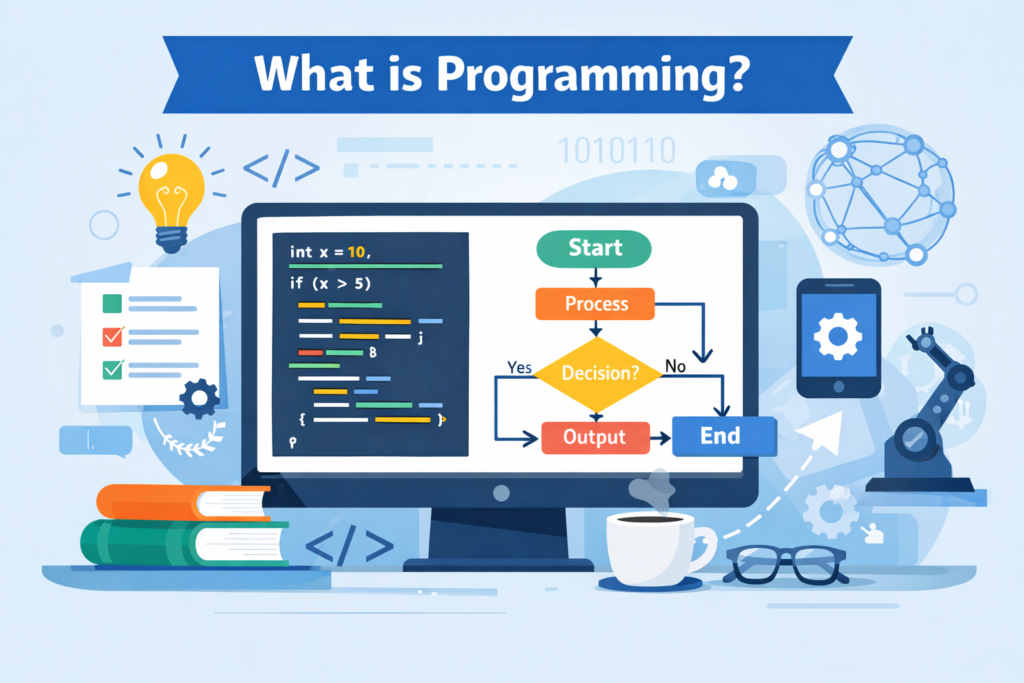
What is programming? Learn the definition, types, languages, examples, and career benefits of programming in this complete beginner-friendly guide.
Programming is the process of giving instructions to a computer so it can perform tasks, solve problems, or create applications. It is the foundation behind websites, mobile apps, software, and modern technologies like AI and automation.
Programming is one of the most important skills in today’s digital world. Every website you visit, mobile app you use, and software you rely on works because of programming. For beginners, the term may sound technical, but the core idea is simple: programming is how humans tell computers what to do.
This article explains what programming is, how it works, why it matters, and how beginners can start learning it. The explanations are clear, practical, and suitable for students, self-learners, and anyone new to technology.
What Is Programming?
Programming is the process of writing instructions that a computer can understand and execute to perform specific tasks.
These instructions are written using programming languages, which act as a communication bridge between humans and machines. Computers do not understand human language, so programmers translate ideas and logic into structured code.
In simple terms:
- Humans think in ideas and logic
- Computers work on instructions
- Programming connects the two
Without programming, computers would be unable to function beyond basic hardware operations.
How Does Programming Work?
Programming works by breaking a problem into logical steps and instructing the computer to follow those steps exactly.
The basic workflow looks like this:
- Identify a problem or task
- Design a logical solution (algorithm)
- Write code using a programming language
- Run the code through a compiler or interpreter
- The computer executes the instructions
For example, when you search for something on Google, programming handles:
- Input from the keyboard
- Processing of search data
- Displaying results on the screen
All of this happens within seconds because of efficient programming.
Why Is Programming Important?
Programming is important because it powers nearly all modern technology.
Key reasons programming matters:
- It enables software, websites, and mobile apps
- It supports automation and efficiency
- It creates global job opportunities
- It drives innovation in fields like AI and data science
- It allows businesses to scale digitally
According to global employment studies, technology and software roles continue to grow faster than many traditional professions.
Real-Life Examples of Programming
Programming is present in everyday life, even if we do not notice it.
Common real-world examples include:
- Mobile apps such as WhatsApp and YouTube
- Websites like Google, Facebook, and Amazon
- ATM machines processing bank transactions
- Traffic signal systems managing road flow
- Smart devices such as smart TVs and watches
Every digital interaction depends on programmed logic working behind the scenes.
What Are Programming Languages?
Programming languages are formal languages used to write instructions that computers can execute.
They allow programmers to:
- Store and manipulate data
- Create conditions and logic
- Interact with hardware and software
Popular programming languages include:
- Python
- JavaScript
- Java
- C and C++
- PHP
Each language has specific strengths and use cases.
Types of Programming Languages
Programming languages can be grouped based on their level and usage.
High-Level Programming Languages
These are closer to human language and easier to learn.
- Python
- JavaScript
- Ruby
Low-Level Programming Languages
These interact more directly with hardware.
- Assembly language
- Machine language
Compiled and Interpreted Languages
- Compiled languages convert code before execution (C++, Java)
- Interpreted languages run code line by line (Python, JavaScript)
Choosing the right language depends on learning goals and project needs.
Programming vs Coding: What Is the Difference?
Programming and coding are related but not the same.
- Coding means writing instructions in a specific language
- Programming includes planning, logic, testing, debugging, and optimization
Coding is one part of programming, while programming is the complete problem-solving process.
What Skills Do You Need to Learn Programming?
Programming does not require advanced mathematics or special talent.
Essential skills include:
- Logical thinking
- Problem-solving ability
- Basic computer knowledge
- Patience and consistency
- Willingness to learn
Most successful programmers started as complete beginners.
Is Programming Hard for Beginners?
Programming can feel challenging at first, but it is not impossible.
Beginners often struggle with:
- Syntax rules
- Error messages
- New concepts
With regular practice and structured learning, programming becomes easier and more enjoyable over time.
How Long Does It Take to Learn Programming?
The learning timeline depends on effort and goals.
Typical learning stages:
- Basics: 1–3 months
- Small projects: 3–6 months
- Job-ready skills: 6–12 months
Programming is a long-term skill that improves with continuous practice.
Career Opportunities After Learning Programming
Programming opens doors to many career paths.
Popular options include:
- Web development
- Mobile app development
- Software engineering
- Data analysis
- Freelancing and remote work
Programming skills are valuable in both technical and non-technical industries.
Future Trends in Programming
Programming continues to evolve with technology.
Major trends include:
- Artificial intelligence and machine learning
- Automation and scripting
- Cloud-based applications
- Cybersecurity development
- Cross-platform software
Strong programming fundamentals prepare learners for future innovations.
Read more: Programming Basics Explained
FAQs
What is programming in simple words?
Programming is giving step-by-step instructions to a computer so it can perform tasks and solve problems.
Is programming only for computer science students?
No, anyone can learn programming regardless of academic background.
Which programming language is best for beginners?
Python is widely recommended due to its simple syntax and versatility.
Do I need a powerful computer to learn programming?
No, basic computers or even online coding platforms are sufficient.
Is programming a good career choice?
Yes, programming offers strong job demand, remote work options, and long-term growth.
Conclusion
Programming is the foundation of today’s digital world and a valuable skill for the future. By understanding what programming is, how it works, and where it is used, beginners can confidently take their first steps into technology. Start small, practice regularly, and build real projects to grow your skills over time. Explore related guides to deepen your learning journey.
Pingback: Programming Basics Explained: A Complete Beginner Guide (2025) - Learn Computer Science Step by Step – From School to University